Monsoon is the season when everyone looks forward to getting drenched in a cool breeze and experiencing a shift in the ambience. However, for some people, this period can be linked to a sense of dread as they experience stiffness and discomfort in their joints and restrict their movements. Is humidity the reason behind this?
Scientific data is conflicting with regard to the connection between humidity and joint discomfort. While there is a theory, a 2024 review failed to observe a link between relative humidity, temperature, barometric pressure, or rainfall with rheumatoid arthritis (RA) and knee or low-back pain. A 2024 systematic review of the literature on osteoarthritis also failed to identify a mechanism by which weather influences pain.
A responsible joint care regimen will focus on the things one can control like exercising, staying hydrated, maintaining a healthy diet, keeping warm, being at a healthy weight, and seeking professional guidance.
How Do Joints Respond to Humidity?
A responsible joint care regimen can benefit from distinguishing between myths and scientific facts.
People with joint issues tend to report higher stiffness during rainy or humid days. Researchers have failed to identify a mechanism which explains this phenomenon.
A 2024 systematic review did not find a connection between relative humidity, temperature, barometric pressure, or rainfall with rheumatoid arthritis (RA) and knee or low-back pain. Similarly, a systematic review on osteoarthritis also failed to discover a mechanism by which weather influences pain.
This means that, for some people, humidity could be a contributing factor, while for others, it is not. Personal conditions and a change in the pattern of activity are other variables which need to be considered. A responsible joint care regimen will focus on addressing a holistic view of the circumstances.

Why Are Stiffness and Discomfort Higher During Monsoon?
Here are a few factors that can be considered when designing a joint care regimen:
1. Sitting on rainy days
Rainy days are perfect for staying indoors and skipping the morning walk. However, sitting for long periods can contribute to stiffness, especially if the person is already uncomfortable when getting up.
A responsible joint care regimen will encourage a person to avoid inactivity, not necessarily encourage them to get active. One can try taking short walks and doing light stretching.
2. Lower temperatures
As a joint care regimen focuses on things one can control, it is essential to identify predictable factors in one’s environment. Temperature is one such factor, especially when one is exposed to the outside elements.
A lot of people have reported stiffness when the temperature drops, especially when sitting for a long time or when waking up from a long nap.
3. Change in lifestyle
A person’s pattern of sleep, walks, meals, and exercise is likely to change when the monsoon season begins. These are indirect but very real contributors to stiffness and discomfort.
A responsible joint care regimen should make allowances to adjust to the changing pattern while not restricting activity to the outside world. Taking a few minutes to do some stretches is a better alternative to a long walk on the rainy day.
4. Personal conditions
A joint care regimen should take note of other factors, like injuries or other preexisting conditions.
A person with osteoarthritis is likely to feel more stiffness than someone with healthy joints. If the discomfort is consistent or increases, it is essential to assess the situation by analyzing the contributing factors.
Monsoon Joint Care: Simple Daily Habits
The basics of joint care are simple and can fit into most daily schedules.
|
Daily Habit |
Why It Matters |
Simple Monsoon Approach |
|
Gentle movement |
Helps avoid prolonged inactivity |
Walk indoors or do light mobility exercises |
|
Stretching |
Supports flexibility |
Stretch gently after waking and long sitting |
|
Hydration |
Supports normal body functions |
Drink water regularly through the day |
|
Balanced meals |
Provides nutrients for overall health |
Include vegetables, fruits, protein and whole grains |
|
Comfortable warmth |
May make stiffness easier to manage |
Keep sensitive areas comfortably warm |
|
Healthy weight |
Reduces load on weight-bearing joints |
Choose sustainable food and activity habits |
|
Rest and sleep |
Supports recovery and daily energy |
Maintain a consistent sleep schedule |
5. Remain active indoors
Gentle movement is extremely important for a joint care regimen. Walking and stretching are excellent activities for this purpose.
Remaining indoors is not a reason to sit on the couch all day. One can get up every hour or so and move the lower limbs, the upper body, or other parts of the body if possible. The aim is not to engage in strenuous activity but to avoid prolonged sitting or standing.
6. Morning Exercises
Gentle exercises are beneficial in the morning to loosen the joints which have been asleep for the whole night. Ankle rotations, knee bends, shoulder rotations, and stretches are all excellent ways to do that. One should avoid painful movements or ones that cause a greater degree of discomfort.
7. Healthy Eating
A responsible joint care regimen will focus on wholesome foods and a balanced diet rather than the specific ingredients which are supposed to benefit the joints. A well-rounded diet full of fresh produce and lean proteins is essential for maintaining overall health, besides reducing inflammation. One should try to avoid processed foods and limit salt and sugar.
8. Sitting for long hours
Working from home can contribute to stiffness if one sits for too long at a time. A responsible joint care regimen will discourage prolonged sitting and recommend regular breaks to walk around.
9. Gentle Exercises
One can remain active indoors and engage in gentle activities to loosen the joints and keep them flexible. Walking is an excellent form of exercise for most people, although it can be dangerous for those with existing joint problems. One should always consult a medical professional before exercising if one has a preexisting medical condition.
10. Keeping a log
If a joint care regimen has been followed for a few weeks and the person believes that their pattern of discomfort follows the change in weather, it is a good idea to keep a log for a month or two to see if such a connection exists. This will allow them to distinguish between sitting for too long, sleeping at irregular times, and discomfort caused by the change in the weather.
When to Consult a Medical Professional For Joint Care During Monsoon?

A responsible joint care regimen will recognize the importance of consulting a doctor if the situation requires it. If the joints are swollen, inflamed, or warm to the touch, or if a person is experiencing excruciating pain, or a fever with no other obvious cause. In addition, if there is an injury, or inability to put weight on the joints, or if the symptoms affect a person’s ability to function normally, it is time to seek professional help.
It is not advisable to stop taking the prescribed medication just because one’s symptoms flare up during the rainy season unless a doctor advises them to do so. Weather sensitivity and preexisting conditions are not the same thing.
Can Ayurvedic Herbs be Used as Part of a Joint Care Regimen During the Monsoon?
Ayurvedic joint care is a comprehensive system which focuses on herbal supplements and lifestyle changes.
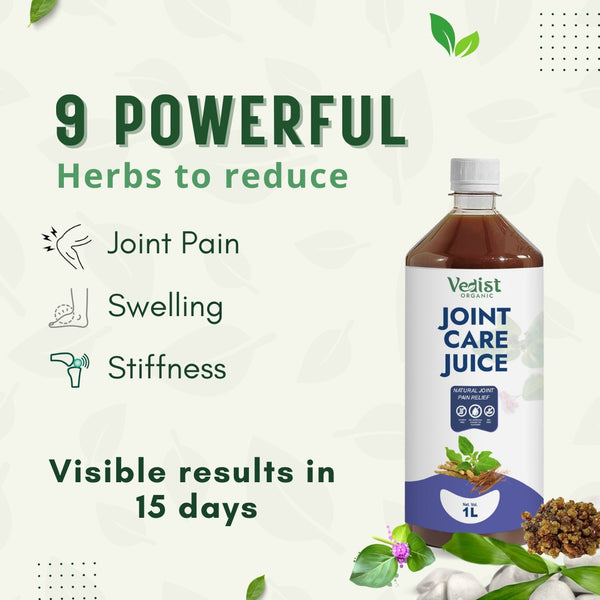
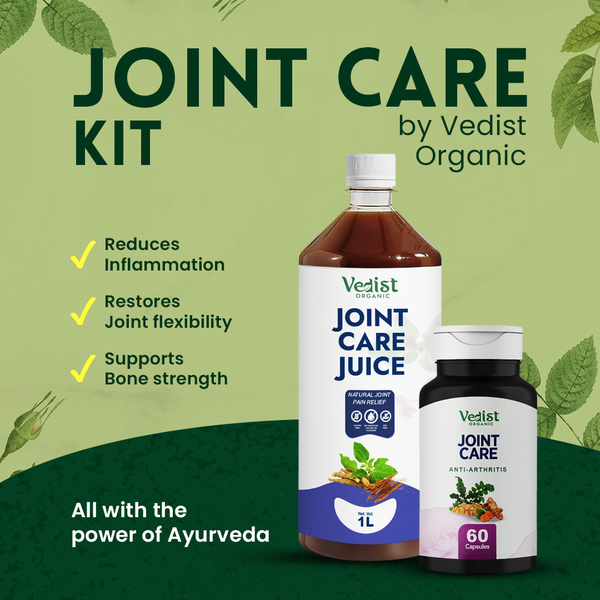
Herbal supplements from Vedist Organic, a well-known brand, can be used as part of a joint care regimen by those who want to explore Ayurvedic treatment. However, they should not be used as a substitute for standard medical care. According to Vedist Organic, their Joint Care Kit contains Joint Care Juice and Joint Care Tablets made with Ayurvedic herbs such as Rasna, Punarnava, Kutki, Khurasani Ajwain, and many others. Vedist Organic claims that its Joint Care Kit is 100% natural and that the ingredients are farm-fresh. As per the brand, their Joint Care Kit helps with joint pain and inflammation and supports joints and bones, flexibility, and range of motion in general.
Vedist Organic Joint Care Kit: A Joint Care Regimen Supplement
For people who want to adopt Ayurvedic medicine as part of their joint care regimen, Vedist Organic’s Joint Care Kit has Joint Care Juice and Tablets made with a combination of Ayurvedic herbs. Vedist Organic lists guggul, Punarnava, Kutki, nagarmotha, Ajwain as some of the ingredients of the Joint Care Juice and Tablets.
According to Vedist Organic, their Joint Care Kit is 100% natural and made with farm-fresh ingredients. The brand promises that the Joint Care Kit promotes joints and bones, flexibility, and range of motion while also reducing joint pain and inflammation.
The Vedist Organic Joint Care Kit is a blend of Joint Care Juice and Tablets which can be handy for people who want to try Ayurvedic herbal supplements for joint pain and stiffness. It is crucial to speak with a verified medical professional before using any herbal supplements, especially for pregnant women or nursing mothers. It is equally essential to follow the recommended dose.

Conclusion
Long-term joint care is a gradual process which focuses on making small adjustments to everyday life. The impact of the monsoon season on joint pain should be taken seriously, but it should not be the focal point of a joint care regimen. Scientific studies have failed to establish a direct link between weather conditions and joint discomfort, while other variables, such as sitting for long hours, can exacerbate the condition for some people. Maintaining a healthy joint care regimen will be focused on responsible joint care, which will entail exercising regularly, staying hydrated, eating healthy meals, getting enough rest, and seeking professional help if necessary. A responsible joint care regimen will emphasize making gradual but meaningful changes. A person can opt for Vedist Organic’s Joint Care Kit as part of their Ayurvedic joint care, but it is essential to understand the role of professional medical assistance.