When it comes to joints, many of us tend to focus on one part of joint care: getting rid of discomfort. Although being able to move freely and without pain is an important part of joint health, there are other, no less important factors that determine how well our joints function. The Joint Health Triangle provides an overview of three pillars of joint health that are mutually interconnected. Neglecting any one of them will have an adverse effect on our ability to perform everyday tasks like walking and climbing stairs.
What Is the Joint Health Triangle?
The Joint Health Triangle is a simple way of understanding the different factors that contribute to comfortable and functional movement.
|
Pillar |
What It Means |
Why It Matters |
|
Mobility |
The ability of a joint to move through its available range |
Helps maintain comfortable everyday movement |
|
Strength |
The ability of muscles around a joint to provide support |
Helps the body handle daily physical demands |
|
Recovery |
Rest, nutrition and appropriate recovery after activity |
Gives the body time to adapt and recover |
|
Balance |
Maintaining all three together |
Supports long-term movement and physical function |
Rather than concentrating only on discomfort, this approach encourages people to build daily habits that support their overall joint health.
Pillar 1: Mobility – Keep The Joints Moving
Movement is an essential pillar in any joint health care regimen. Our joints were meant to move, and staying in one position for too long can cause discomfort or reduce your range of motion. For example, if you sit at a desk for too long, you may feel stiff when trying to stand up. Similarly, if you spend too long sitting or lying still, you may feel uncomfortable when trying to do certain movements.
Here are some ways in which you can keep your joints moving:
• If you must sit for a long time, try to take regular breaks to walk around
• Take regular breaks from sitting and do some light mobilization
• Regularly move your ankles, knees, hips, shoulders, and wrists
• Limit the amount of time spent sitting or lying still
• Do some form of physical activity that can challenge your mobility
• Do not be afraid to engage in complex movements
As you can see, mobility does not necessarily mean doing complex stretching routines. It is all about giving your body the opportunity to move in whatever way feels comfortable.
 Why Is It Important To Keep Your Joints Moving?
Suppose two people lead a generally similar lifestyle. One of them, however, takes regular breaks from sitting to move around, while the other basically sits all day. How different will their joint health be? It should be evident that the two people will have a generally similar joint health status.
The reason for this is that the ability to move is essential for joint health, and the more you sit or otherwise limit your movements, the worse joint health will be. So the point is not to do constant and intense physical activity.
Pillar 2: Strength – Build Your Endurance
Mobility is good, but it needs to be complemented by another essential pillar of joint health: building your endurance. Strength is what enables you to do things and to engage in physical activities. In other words, it enables you to live your life. Specifically, strength training can help you perform everyday tasks like walking, climbing stairs, carrying bags of groceries, or sitting and standing up from a chair.
Here are some examples of strength-building exercises for your lower body:
• Bodyweight or chair squats
• Step-ups
• Calf raises
• Controlled leg movements
• Resistance band exercises
And here are some examples of strength-building exercises for your upper body:
• Wall push-ups
• Resistance band exercises
• Light strength training exercises
Of course, you should choose exercises based on your fitness level. If you have swelling, pain, instability, or limited range of motion, consult a professional before engaging in any strength-building regimen.
Strength vs. Mobility: Why You Need Both
It is important to realize that strength and mobility are two sides of the same coin. In particular, a joint may have good mobility but poor muscle strength around it, and vice versa. Both are needed for optimal joint function, and that is why both should be components of your joint care regimen.
Pillar 3: Recovery – Do Not Forget To Rest
When it comes to joint health, many people forget about the importance of rest and recovery. In particular, people assume that the best way to improve their joint health is to subject their joints to constant stress. However, a well-balanced joint care regimen will include time for your joints to rest and recover. There are several factors that affect how well your joints recover after stressful activity.
Sleep
Adequate sleep is essential for your overall health and wellbeing. In particular, it promotes the recovery and healing processes in your body. It is therefore essential to have a good sleep schedule and a comfortable sleeping environment.
Nutrition
Your body needs a steady supply of protein, vitamins, and minerals to keep your muscles, joints, and other tissues strong and healthy. Therefore, it is essential to eat a balanced diet that includes plenty of fruits, vegetables, whole grains, legumes, nuts, and other nutrient-rich foods.
Hydration
Water is necessary for all bodily functions, and staying well-hydrated is essential for keeping your joints healthy and mobile. A good hydration schedule is relatively simple to follow: drink plenty of water throughout the day.
Managing Activity
Managing your activity levels is also an important part of joint recovery. Specifically, you need to make sure that you allow your joints to adequately recover after engaging in various physical activities. In particular, you need to be aware of the fact that activity affects your joints differently depending on the intensity of the activity and how long you do it for. Put simply, if you engage in constant and intense physical activity, your joints will eventually start to pay the price.
Now that you know about the basics of mobility, strength, and recovery, let us see how the three pillars of joint health are interconnected.
 How Mobility, Strength, and Recovery Are Connected
The three pillars of joint health are interconnected in a number of ways. In particular, having good mobility enables you to participate in physical activities. This, in turn, enables you to build strength, and strength enables you to do things. On the other hand, insufficient sleep, poor nutrition, and other factors that affect recovery will negatively impact your ability to engage in physical activities. It is therefore clear that all three pillars are closely interconnected and need to be properly balanced. For example, when you build strength, you need to remember that strength training can be stressful for your joints, and you should give your joints adequate time to recover.
It is also important to realize that none of the three pillars is more important than the others. In other words, even if you have good mobility and muscle strength, poor recovery will undermine the other two pillars. Similarly, even if you have good mobility, poor muscle strength will prevent you from effectively participating in physical activities. A good analogy for the relationship between the three pillars is a balanced diet: you need all the nutrients and vitamins for your body to function properly.
A Simple Daily Regimen for Maintaining Joint Health
Now that you know about the basics of a joint care regimen, you can design a simple daily regimen that is tailored to your personal needs and circumstances. Here is a simple example of a daily regimen for joint care:
Morning
Gentle stretching and walking (if possible)
During the day
If you must sit for a long time, make sure to get up and move around at regular intervals
In the evening
Some physical exercises (e.g., bodyweight or chair squats) 2 or 3 times per week (or as your fitness level allows)
During the day
Make sure to eat a balanced diet and stay hydrated; avoid prolonged sitting or other activities that put undue stress on your joints
At night
A good sleep hygiene routine that promotes quality sleep
Following a joint health care regimen is largely a matter of consistency – doing something, even if it is little, is almost always better than doing nothing at all.
Common Mistakes in Joint Health Care
There are several common joint health care mistakes that can greatly impact the effectiveness of your joint care regimen.
Common Mistakes Description
Not seeking professional help for severe pain and discomfort Persistent discomfort, significant stiffness, and pain should be evaluated by a healthcare professional
Doing too much, too soon Increasing the time and intensity of your physical activities too quickly can increase the risk of injury
Focusing only on stretching A properly designed joint health care regimen includes mobility, strength, and recovery
Lack of movement Sitting or otherwise remaining inactive for long periods of time can adversely affect your joint health
Not consulting a healthcare professional for specific conditions Severe pain, stiffness, injuries, or other issues should be evaluated by a healthcare professional
Supporting Your Joints: Natural Products for Joint Wellness
In addition to the basic movement, diet, and recovery principles, many people are also interested in various products that supposedly have a positive effect on their joints. When looking for such products, it is important to choose wisely. In particular, make sure to buy from a reputed seller that is transparent about their manufacturing process and ingredients. At the same time, be wary of unsubstantiated marketing claims. Whenever possible, choose products with a simple and transparent ingredient list that specifically address your needs.
As mentioned, a well-rounded joint health care regimen should focus on three interconnected pillars: mobility, strength, and recovery. Many products, however, tend to focus on only one or two of them. One such product is Vedist Organic Joint Care Kit.

Vedist Organic Joint Care Kit Review
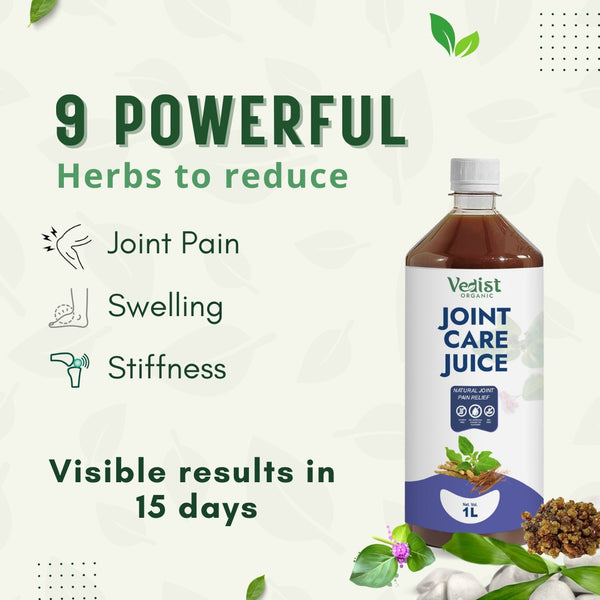
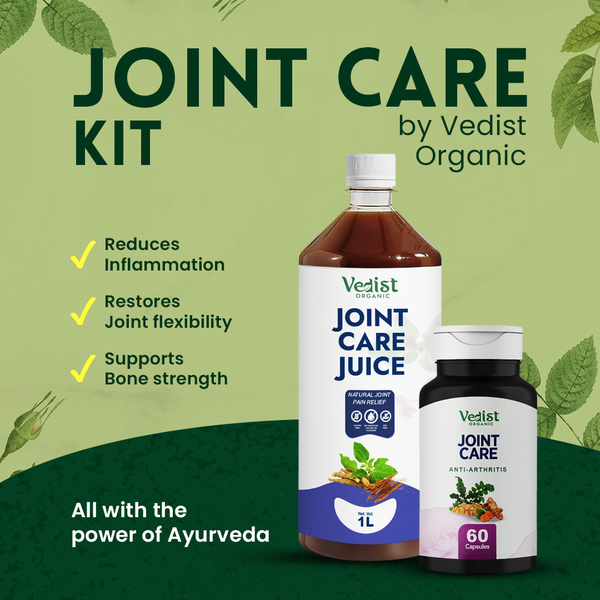
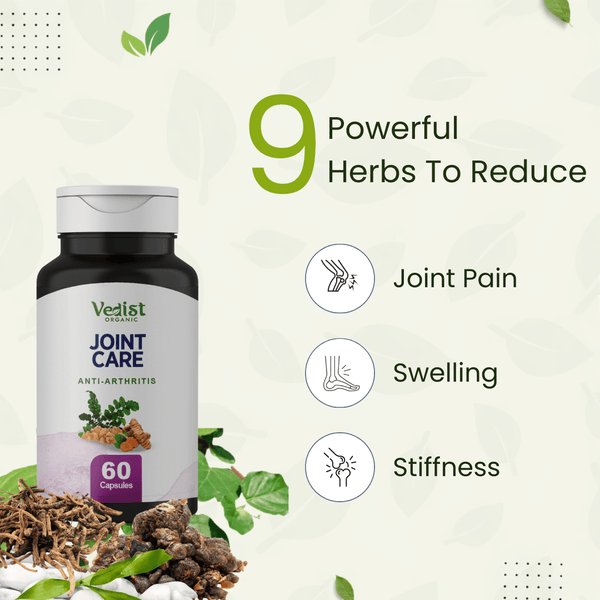
The Vedist Organic Joint Care Kit is a herbal joint health care product that contains a Joint Care Juice and a Babool Phali Powder. Vedist Organic states that their Joint Care Kit is a herbal wellness combination that supports joint health and recommends the Joint Care Kit for people who want to pursue an active lifestyle while minimizing joint strain. Vedist Organic states that their Joint Care Juice and Babool Phali Powder are both made from natural ingredients and follow a holistic approach to joint wellness.
The ingredients of Vedist Organic Joint Care Juice include Kutki, Rasna, Shallaki, Khurasani Ajwain, and Nirgundi. The Joint Care Juice provides a blend of essential nutrients and herbs that promote joint health and mobility. The Babool Phali Powder contains the active ingredients of Babool Phali, which have traditionally been used for their beneficial effects on the joints. Vedist Organic takes a holistic approach to joint care and is committed to providing high-quality herbal products. The company also has a transparent manufacturing process and is dedicated to customer satisfaction. They offer a convenient and effective joint care solution that promotes overall wellbeing. The combination of Joint Care Juice and Babool Phali Powder is convenient, economical, and effective in supporting joint health. Overall, Vedist Organic Joint Care Kit is a great addition to your joint health care regimen. However, it should be remembered that a proper diet and exercise are also essential for joint health and should not be neglected.
Final Thoughts
Healthy movement is an essential part of anyone’s life. However, it is important to remember that there is no single factor that determines healthy movement. Mobility, strength, and recovery are the three pillars of healthy movement. By focusing on these three interconnected pillars and taking small steps towards better joint health, you can greatly improve your joint health.